

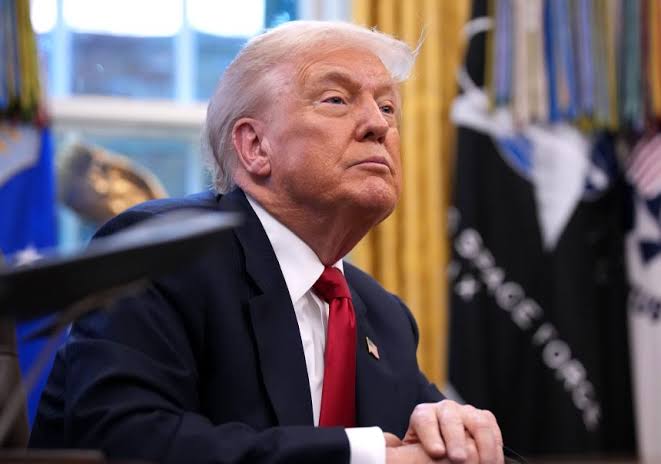
President Donald Trump has faced renewed scrutiny on social media following a heated exchange with The Independent’s White House correspondent Andrew Feinberg in the Oval Office. The confrontation prompted online debate about the president’s behaviour and renewed speculation about his mental and physical health.
During a press gathering on Tuesday, October 20, Trump repeatedly interrupted Feinberg, ordered him to be quiet and warned him to “be careful.” The president also questioned the reporter’s health, asking whether he was a “sick person” and suggesting that something was wrong with him.
Video clips of the exchange quickly circulated online, attracting widespread attention and prompting sharply divided reactions from political commentators, social media users and administration supporters.
Trump’s Exchange With Andrew Feinberg Goes Viral
The confrontation began during an Oval Office event where Trump and Vice President JD Vance discussed a new initiative designed to encourage people to report suspected government fraud.
Feinberg questioned the president about the proposed whistleblower programme, particularly its promise to reward informants with a percentage of the funds recovered. After Trump and Vance responded, the president asked Feinberg who he was.
The reporter later attempted to ask additional questions, including one about plans to renovate a public golf course in Washington, D.C. Trump became increasingly confrontational as Feinberg tried to speak.
“I don’t know who the hell you are, but you better be careful,” Trump told the reporter.
The president subsequently demanded silence and questioned Feinberg’s health, prompting further criticism and discussion online.
The exchange attracted attention partly because Trump has frequently clashed with journalists during his political career. However, the latest confrontation generated additional debate about his temperament and the way he responds to challenging questions from the press.
Social Media Users Question Trump’s Behaviour
The footage prompted numerous reactions on social media, with some critics expressing alarm at the president’s apparent anger.
Progressive political strategist Chris Sosa described the exchange as frightening, while former Republican congressman Adam Kinzinger criticised Trump’s behaviour in a post on X.
Other commentators used the confrontation to raise broader questions about whether Trump remains fit to carry out the responsibilities of the presidency.
Some social media users went further, suggesting that the president’s anger and changes in demeanour could indicate dementia or another cognitive condition.
However, these comments reflect public speculation rather than an established medical conclusion. A video of an angry exchange cannot, on its own, establish whether someone has dementia or another neurological disorder.
The episode has nevertheless renewed debate about the president’s health, an issue that has attracted attention throughout his second term.
Claims About Cognitive Decline Remain Disputed
Trump’s critics have increasingly questioned his mental fitness, pointing to his public appearances, verbal confrontations and other moments they interpret as signs of possible cognitive decline.
Some online commenters have specifically raised concerns about dementia, including Lewy body dementia. Those claims have not been established by the footage of the Oval Office exchange.
The distinction matters because medical professionals cannot reliably diagnose dementia from a short video or an isolated instance of aggressive behaviour. A proper assessment requires clinical evaluation and consideration of a person’s medical history, symptoms and cognitive functioning.
Trump’s supporters, meanwhile, have rejected suggestions that his behaviour demonstrates a medical problem. The White House has repeatedly defended his mental sharpness, energy and ability to perform his duties.
The competing claims have turned the president’s health into a recurring political argument, with supporters and opponents often interpreting the same public appearances in sharply different ways.
White House Defends Trump’s Health
The White House has forcefully pushed back against claims that Trump is mentally or physically unfit to serve as president.
Spokesperson Davis Ingle previously described Trump as the “sharpest” and most energetic president in American history. He also criticised medical professionals who speculate publicly about the president’s health without examining him.
Administration officials have also responded to questions about Trump’s physical condition.
The White House has attributed recurring bruising on the president’s hands to frequent handshakes and said chronic venous insufficiency accounts for swelling in his ankles.
Trump’s apparent daytime drowsiness has also attracted attention. In response to allegations that the president has fallen asleep during public events, the White House Rapid Response account has shared images of television news presenters with their eyes closed, seemingly challenging the criticism.
These responses form part of the administration’s broader effort to counter questions about the president’s health and ability to carry out his responsibilities.
Medical Experts Have Raised Broader Health Questions
Some medical commentators have publicly discussed concerns about Trump’s sleep patterns and general health.
CNN medical analyst Dr. Jonathan Reiner has previously commented on what he described as significant daytime sleepiness and discussed the potential health consequences of chronic insomnia, particularly among older adults.
For older people, persistent sleep problems can affect attention, memory and other aspects of cognitive functioning. However, discussing the potential consequences of sleep disorders does not establish that a particular individual has dementia.
Forensic and social psychiatrist Dr. Bandy Lee has also publicly expressed concerns about Trump’s psychological stability. Such assessments have contributed to the wider debate, although public commentary should not be confused with a confirmed clinical diagnosis based on a direct examination.
Trump’s age has added another dimension to the discussion. He became the oldest person to be inaugurated as U.S. president, making questions about his health and capacity to serve a subject of continuing public interest.
Nevertheless, age, an angry outburst or an appearance of tiredness does not independently establish cognitive impairment.
Trump’s Health Remains a Political Flashpoint
The confrontation with Feinberg illustrates how exchanges between Trump and journalists can quickly become broader political controversies.
For critics, the president’s response renewed concerns about his temperament, public conduct and fitness for office. Supporters have defended him and rejected claims that the incident demonstrates a medical problem.
The White House has maintained that Trump remains capable of performing his duties, while speculation about his health continues to circulate online.
For now, the viral footage provides evidence of a tense exchange between the president and a reporter, but it does not establish a diagnosis of dementia or another cognitive disorder.
As discussion continues, distinguishing verified medical information from political commentary and social media speculation remains essential to understanding the controversy.